
Did you know that traveling with a portable carbon monoxide alarm can be one of the best things you do when it comes to travel safety? When you think about staying safe when you travel, I'm sure that all sorts of ideas come to mind: not walking in an unfamiliar area at night, not getting too close to the edge of a cliff, or not making yourself a target for thieves.
However, there's a silent killer that puts you at risk when you travel, especially in the winter. Whether you're spending the night at reputable hotels or rented holiday homes, you could be at risk for carbon monoxide poisoning. By bringing First Alert's portable carbon monoxide alarm along on your travels, you'll stay safe from a potentially fatal incident.

What is Carbon Monoxide?
Carbon monoxide is an odorless, colorless, tasteless gas. Carbon monoxide poisoning happens when too much CO accumulates in your bloodstream. CO can be produced by burning fuel like gasoline, propane, charcoal, or others. In a home or building, carbon monoxide can build up when using a stove or heater that isn't properly ventilated.

Sadly, the symptoms of carbon monoxide poisoning aren't specific to the illness and can be mistaken for a cold or flu. These symptoms include headaches, dizziness, weakness, vomiting, or confusion (except there is no fever with CO poisoning). Many people who don't wake up from these symptoms can die in their sleep.
As carbon monoxide is completely invisible to the senses, having a carbon monoxide alarm installed is the only way to detect it. While I'm sure you have a CO alarm in your home, there isn't any way of knowing whether or not your accommodation when traveling will have one properly installed. Thankfully, First Alert has a tabletop carbon monoxide alarm that you can easily bring along with you on your holidays.
Why Does CO Poisoning Happen More Frequently in Winter?

Carbon monoxide poisoning happens more often during winter, so it's important to keep yourself safe during winter travels. Even though most CO poisonings happen from car exhaust or furnaces, the cases spike after a natural disaster.
When there's a power outage, people use gas-powered generators in their homes, which can create a buildup of carbon monoxide indoors. There's also the risk of malfunctioning heating systems, dryers or fireplaces that aren't vented properly, or leaving the car running in a poorly ventilated space.
The easiest way to keep yourself protected from CO poisoning, especially when it's a higher risk factor in the winter, is through the use of a CO alarm. When you're traveling, it's important to carry a portable carbon monoxide alarm with you.
Carbon Monoxide Poisoning While Traveling

There are many cases of carbon monoxide related illnesses and deaths at hotels, motels, and Airbnb accommodations. As you travel the world, you might not even be sure that there's a law that requires a carbon monoxide detector in your hotel.
It isn't just overseas that this could happen. Between 2005 and 2018, there were 115 incidents of CO poisonings at hotels in the United States, resulting in 22 fatalities. There was a recent case of carbon monoxide poisoning at a Canadian hotel with 46 people hospitalized and 15 in critical condition.
And then there are Airbnbs. You can't be certain that there's a carbon monoxide alarm in your Airbnb rental. Airbnb encourages its hosts to install them, but doesn't make it a rule or a guarantee.
First Alert's Carbon Monoxide Alarm for Travel

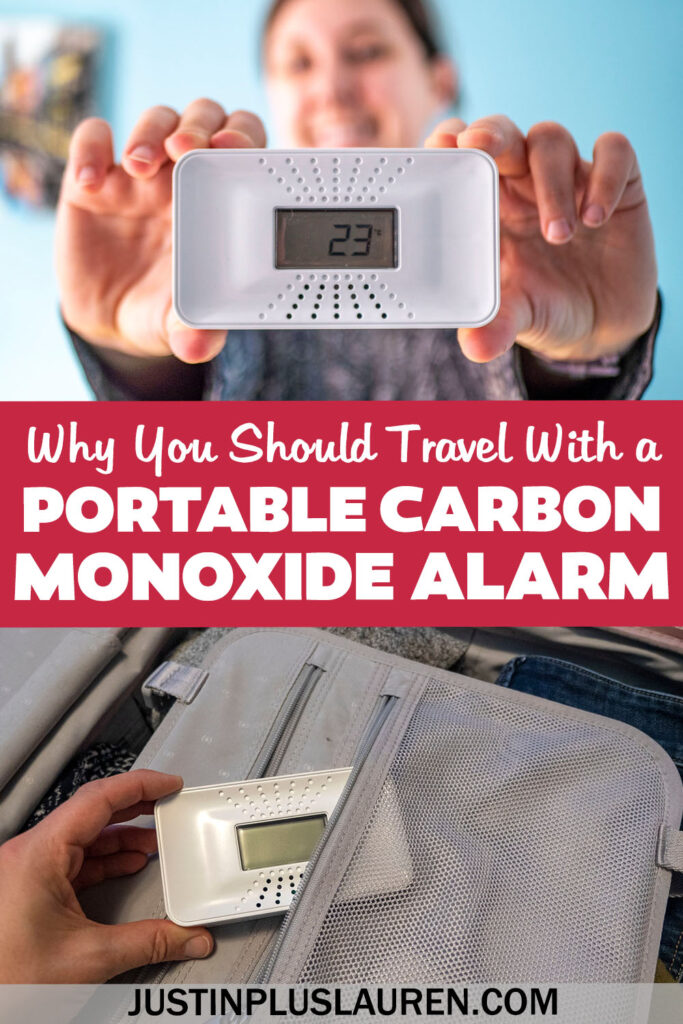
First Alert's portable carbon monoxide alarm is perfect to bring along on your travels. It's lightweight, fits easily into your luggage, and there's no installation required. Once you reach your destination, simply turn on the carbon monoxide alarm and it's good to go...for 10 years!

You don't need to worry about replacing the batteries. As the portable carbon monoxide detector nears the end of its life, it will sound an alarm to get a replacement.

The First Alert portable carbon monoxide detector is stylish and has a back-lit display that shows the temperature and CO levels when they're detected. Place your First Alert portable carbon monoxide alarm on any tabletop wherever you go and you'll be protected. It's as simple as that. You'll have peace of mind no matter where you're resting your head at night.

Before writing this post and testing out this portable carbon monoxide alarm, I really hadn't given much thought to bringing one on my trips. Now that I know, I am definitely going to pack this CO alarm on all of my future travels. This is such a small device to pack in your suitcase, and it's no hassle at all to bring with you. It's really better to be safe than sorry, wouldn't you agree?
Thank you First Alert for sponsoring this post. Help ensure you're protected from CO when on the go!
More Blog Posts About Travel Planning & Safety
It's best to plan ahead when it comes to travel. Protect yourself as much as possible from expensive mishaps and unsafe situations by becoming informed.
- 30 All Inclusive Resort Tips and Mistakes To Avoid
- Best Luggage Storage: Where to Store Your Bags While Traveling
- How to Plan an International Trip: Practical Tips for Traveling Abroad
- How to Save Money for Travel: Awesome Tips for Living a Life of Travel
- How Travel Insurance Works: A Practical Guide to Travel Insurance
- Can't Travel? Here are the Best Virtual Travel Experiences to See the World
- How to Find Cheap Flights and Score the Best Flight Deals
- How to Travel with a Dog: The Ultimate Guide
- 10 Reasons to Take an Adult Gap Year or Career Break
- Why You Need to Travel with a Portable Carbon Monoxide Alarm
- How Travel Can Expand Your Comfort Zone (Even if it Scares You)
- 10 Top Travel Safety Tips: How to Travel Safely No Matter Where You're Going
- Travel Price Comparison Websites To Save Money
- How to Convince Your Partner to Travel With You
Need Travel Insurance?
You should never leave home without travel insurance! Check out the best rates to make sure you're covered in case of an emergency or accident.
| Follow Justin Plus Lauren: Instagram | Facebook | Twitter | YouTube | Join our Travel Community |



Leave a Reply